Somebody Cancels Three Weeks Out and Your Policy Says Nothing
A refund policy written in a hurry gets rewritten later by whoever is angriest.
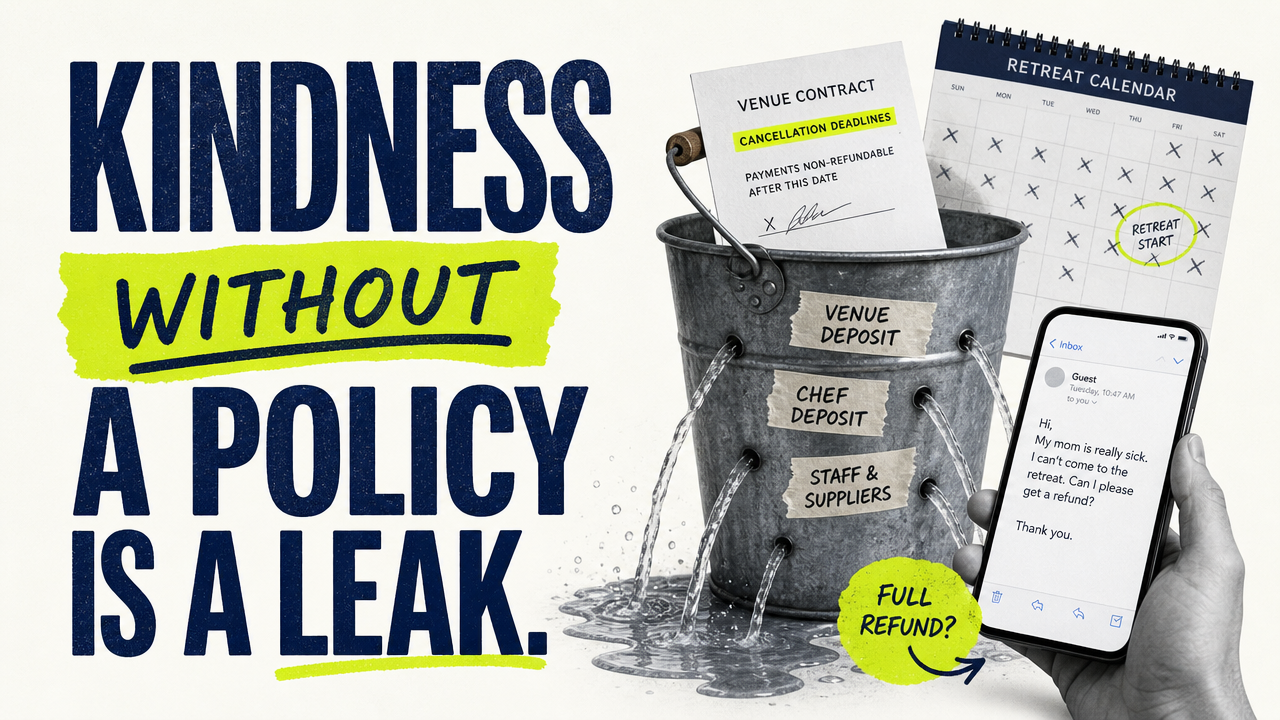
A guest emails on a Tuesday. Her mother is sick, she can't come, and she'd like her money back. Your stomach drops, because you have a payment on the books, a bed held, a chef counting heads, and one vague sentence on your booking page that says deposits are "generally" non-refundable. Generally.
So you write back something warm and apologetic, and you refund her in full because you're a decent human being. You eat the cost. Then it happens again next month.
Kindness without a policy is just a leak
Every exception you make on the spot becomes a rule you never agreed to. Guests talk to each other. The next person who needs out already knows what to ask for, and a few will ask loudly.
Your costs don't care how you feel about it. The venue wants its deposit by a date. The caterer needs a headcount by another one. Those commitments land long before the retreat does, and none of them refund just because you did.
Build the policy backward from your own deadlines
Pull out your venue contract and find the dates where money gets locked. Final headcount, final payment, the day the deposit stops coming back. Those dates are the skeleton of your policy.
Now lay the guest-facing version over them with some breathing room. If the venue stops refunding at 45 days, you can't promise guests a full refund at 30. Sounds obvious, yet most leaders have never put the two documents side by side.
A tiered structure covers most situations. A refund minus a small admin fee early on, half later, nothing in the final stretch unless you fill the spot. Set the actual numbers from your own contracts and your own margins.
Give people a door that isn't a refund
Most cancellations have little to do with money. Life happened. Offer a transfer to a future retreat, or let the guest send a friend in their place. A credit keeps the cash inside your business and the person inside your world.
Someone who feels looked after tends to rebook. Someone who feels hustled writes the review. You get to pick which one you're building.
Put it where nobody can miss it
The policy belongs on the sales page, in the booking confirmation, and in the payment plan agreement. Use plain words. Add a checkbox so the guest acknowledges it before paying.
A policy buried in a PDF footer is a policy you will argue about in your inbox. Read yours out loud. If it sounds cold, change the tone and leave the terms alone. "Here's what happens if life gets in the way" lands softer than "Cancellation Terms and Conditions."
Know when to bend, and bend on purpose
A policy doesn't mean you turn into a vending machine. A death in the family or a medical emergency might deserve a full refund, and you're allowed to give one.
The difference is that you decide it as the owner, with your numbers in front of you, and you tell the guest it's a one-time exception. Done that way it builds loyalty. Done in a panic at 11pm, it just teaches everyone else what to say.
Your move this week
Open your venue contract and your booking page side by side. List every date where money becomes unrecoverable for you, then check whether your guest policy protects each one. If it doesn't, draft a tiered version and run it past someone who handles contracts for a living. Publish it before the next person books. People already booked stay under the terms they agreed to.
> "Write the policy while nobody is crying, because that's the only time you'll write it fairly." You know how to run a retreat. We teach you how to build the business behind it.